Polycystic ovary syndrome has a new name: polyendocrine metabolic ovarian syndrome (PMOS). But its impact on fertility is as important as ever. Here’s what a PMOS diagnosis means if you’re trying to conceive, and how it can be managed.
First, the name
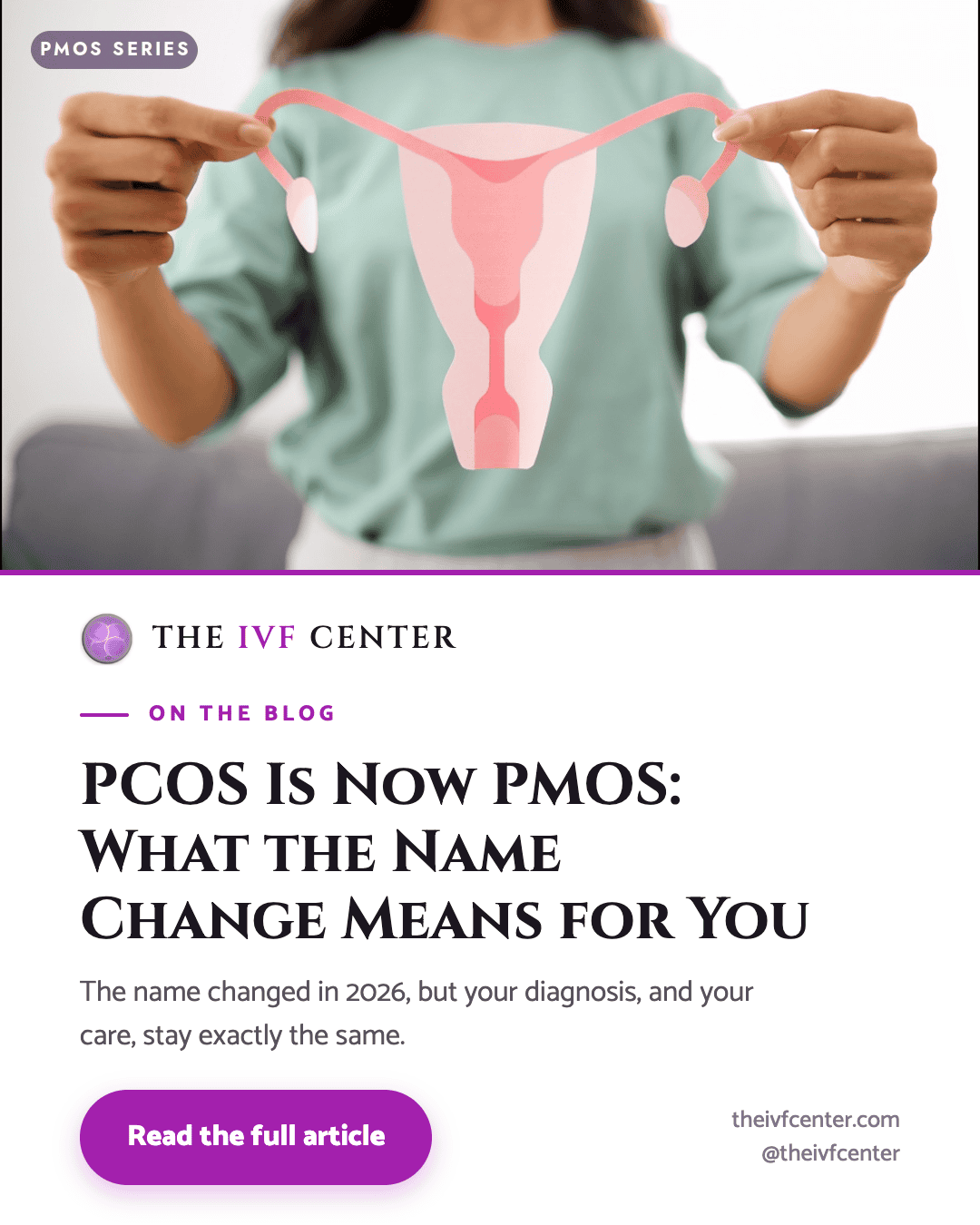
If you’ve read that PCOS is now called PMOS, you’re right. In May 2026, following a 14-year global review published in The Lancet, polycystic ovary syndrome was officially renamed polyendocrine metabolic ovarian syndrome (PMOS). The condition, its diagnosis and its treatment are unchanged: the new name simply reflects that this is a whole-body hormonal and metabolic condition, not just an ovarian one.
Throughout the current transition period (2026–2028), you’ll see both names used. In this article we’ll use PMOS.
Why PMOS affects fertility?
PMOS is one of the most common causes of difficulty conceiving in women of reproductive age. The reason comes down to ovulation.
In a typical cycle, an egg matures and is released each month. In PMOS, a hormonal and metabolic imbalance can interrupt this process. Follicles (the small sacs that contain immature eggs) often begin to develop but don’t mature or release an egg. This is why they can appear as many small follicles on an ultrasound (and why the old “cysts” label was misleading: these aren’t cysts).
Irregular or absent ovulation means fewer opportunities to conceive, and less predictable timing. Alongside this, two other features of PMOS play a role:
– Elevated androgens (“male-type” hormones such as testosterone) can interfere with the normal development and release of eggs.
– Insulin resistance, common in PMOS, can worsen the hormonal imbalance and further disrupt ovulation.
The good news: because these mechanisms are well understood, PMOS-related fertility challenges are among the most treatable.
The good news about PMOS and Pregnancy
A PMOS diagnosis does not mean you can’t get pregnant. Many people with PMOS conceive — some naturally, and many with support. Because the core issue is often ovulation rather than the egg or the uterus itself, treatment that restores or triggers ovulation is frequently very effective.
The key is a thorough, whole-person assessment and a plan tailored to you.
How PMOS-related fertility challenges are managed
Treatment is usually stepped, starting with the least invasive options:
1. Lifestyle and metabolic support. Because insulin resistance sits at the heart of PMOS for many people, improving metabolic health can have a meaningful effect on ovulation and cycle regularity. This is a first-line, evidence-based part of care — not a substitute for medical treatment, but a foundation for it.
2. Ovulation induction. Medications can encourage the ovaries to mature and release an egg. These are often the first medical step for people with PMOS who are ovulating irregularly, and they help many people conceive.
3. Managing insulin resistance. Where relevant, addressing insulin resistance can support ovulation and overall PMOS management.
4. Assisted reproduction. If simpler approaches aren’t successful, treatments such as IVF are highly effective options for PMOS. Care is taken to tailor stimulation carefully, because PMOS ovaries can be very responsive.
The right path depends on your individual hormonal and metabolic picture, your age, how long you’ve been trying, and any other factors — which is exactly why an individualised assessment matters.
Why the whole-person view helps
This is where the new name is more than semantics. Treating PMOS purely as an “ovary problem” misses the levers that often matter most for fertility: hormones and metabolism. A PMOS-informed approach looks at ovulation, androgens, insulin resistance and lifestyle together, giving a fuller picture and, often, better outcomes.
It also means caring for your health beyond conception. Managing the metabolic side of PMOS supports a healthier pregnancy and your long-term wellbeing.
When to seek for help
Consider a fertility assessment if:
1. You have irregular or absent periods and are trying to conceive.
2. You’ve been trying for 12 months without success (or 6 months if you’re over 35).
3. You have a PMOS (or PCOS) diagnosis and are planning a pregnancy.
4. You have symptoms that suggest PMOS and want clarity before trying.
Early assessment is one of the most valuable steps you can take. It gives you information, options and, often, reassurance. At The IVF Center, we take a whole-person approach to PMOS and fertility, assessing hormones, metabolism and ovulation together, and building a plan around you. If you’d like to understand your options, we’d be glad to talk.
If you want to understand it better: join our free webinar, “PCOS is now PMOS: what the name change means for you” where our team will explain the change and answer your questions live.
[Book a call with a Care Navigator] · [Register for the webinar]
________________________________________________________
This article is for general information and education. It is not a substitute for personalised medical advice. If you have concerns about your symptoms or diagnosis, please speak to a qualified healthcare professional or contact our team.